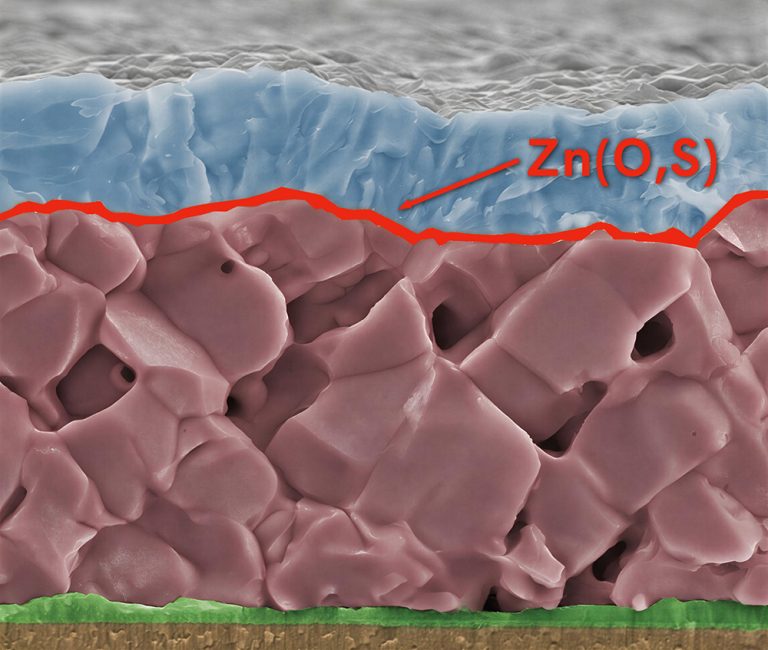
The aim of the NCBiR SMART project : Technology of magnetron deposition of cadmium-free buffer layers with a system for optimizing the production of CIGSe modules with increased efficiency is to develop a technology for the production of thin-film CIGSe photovoltaic modules without the use of toxic cadmium, while increasing the efficiency of solar energy conversion and improving the effectiveness of the production process.
Roltec's tasks within the Project:
As part of the consortium's work with Wrocław University of Science and Technology, in which Roltec is the project leader, research and development will be conducted on the development of a cadmium-free bezkadmowej technologii wytwarzania thin-film CIGSe photovoltaic modules with improved CIGSe o podwyższonej sprawnościincludes the development and optimization opracowanie i optymalizację procesu nanoszenia warstw buforowych na zinc and sulfur compounds (Zn(O,S) and other group II-VI semiconductors), the development ofdiagnostic methods and physical cell models, and the development of systems using machine learning to optimize process parameters. The technology will then be scaled up from laboratory to large-format CIGSe modules and verified under conditions similar to those of industrial use.
The project's results will be primarily aimed at consumers and users of photovoltaic technologies, particularly those seeking high-efficiency and more environmentally friendly PV modules. Potential applications include commercial and industrial construction, BIPV and BAPV installations, roofs with limited load-bearing capacity, and non-standard surfaces.
Effects and results of the project:
The project's main outcome will be the development of a thin-film, cadmium-free CIGSe photovoltaic module with solar energy conversion efficiency exceeding 16%, along with its manufacturing technology. The project will also lead to the development of a system for monitoring and optimizing the production process using machine learning methods, which will improve the quality, repeatability, and efficiency of large-format PV module production.